The OneStream Community is temporarily frozen until June 29th due to the ongoing maintenance. Please read the blog post here to learn more.
Forum Discussion

AshleeB
2 years agoNew Contributor III
Best way to use a new data source value (attribute 9) in a dashboard
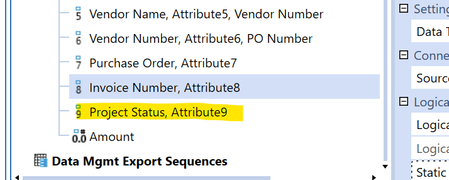
We're pulling project status' as our attribute 9 from an ERP integration what is the best way to pull those values into an existing summary dashboard? I was going the UD8 route but is there an easier...

AshleeB
2 years agoNew Contributor III
Henning- Your reply is fantastic, thank you! What do you mean when you say, "I strongly advise against cube-based reporting and apply a more relational-blend centric logic."? What would that look like? We have a lot of data coming in and our cube view to dashboards have a hard time supporting it.

Henning OneStream Employee
2 years agoOneStream EmployeeHi Ashlee,
As always, it depends on various factors. It depends on data volumes, reporting requirements, amongst other things.
On a high-level, I meant with my comment that having a large number of projects in the cube is not ideal in terms of data volumes, but, - IMHO - the maintainability aspect of it is also critical. If one is creating hundreds of new projects in a dimension each period, the additional workload for maintaining those as well as managing other aspects such as reports, security and others often surpasses the additional reporting benefit of having this in the cube.
Typically, such data is useful in the short-term only. One can pull short-term project data into a data table (OneStream Stage, BI Blend, custom table, etc.) and report from there. Reporting on this data mostly goes through grid views, BI Viewer reports, or Table Views (in spreadsheets); all possible to be used in dashboards. One can apply a UD8 reporting to pull the data into a cube view, though I would personally keep this to where needed only. And as outlined before, this can mostly only happen on a summarized level (due to the many-to-one relationship of the nature of the data).
This guide is lengthy but gets to the foundation of this (Why? How? Where?).
As for your follow-up question, you can load the data to Stage and other tables as already mentioned and report from there using e.g. the possibilities highlighted in bold in the earlier paragraph. What you describe here sounds like you are pulling a lot of data into the cube and have problems supporting it due to the short-termed nature of the data which means you have a huge amount of maintenance work and probably many user requests bombarding you all the time. This is of course all just a guess on my side. Nevertheless, this sounds like it might be worth the time taking back a step and reconsidering the way you load, store, process and report (parts of) your data.
Related Content
- 4 months ago
- 4 years ago
- 2 years ago