Recent Discussions

Unsaved changes lost despite clicking Cancel when navigating between Input Forms?
Hi all, If I enter data in an Input Form without saving and then navigate to another Input Form workflow step, the "The selected item has not been saved" warning message is displayed. However, Cancel does not prevent navigation and the unsaved changes are lost. I've tested several other navigation scenarios (changing period, scenario, entity, navigating to dashboards, cube views, or non-Input Form workflow steps) and in those cases Cancel behaves as expected and preserves the unsaved data. The issue seems to occur only when moving from one Input Form workflow step to another. Any ideas on how to prevent unsaved changes from being lost if a user forgets to click Save before leaving the Input Form?NisrineChennani1 day agoNew Contributor25Views0likes2Comments
How can I force a delimited data source to not skip blank values in an Amount field?
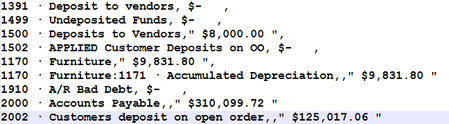
I have a situation where I'm trying to load trial balances from QuickBooks. The source file I'm receiving has three comma-separated columns - Account+Description, Debit, Credit. QuickBooks has a quirky output format where some debit balances are shown as "$-" (presumably to represent 0.00), leaving the credit column blank. If there is a credit value in the credit column, the debit column is blank. This is messing with OneStream's numeric processing of the Amount column when Amount is mapped to Column 2 (Debit column). It is rejecting the "$-" field values and the blank field values as Non-Numeric Amounts (verified in the XFL log file for the load). I can successfully replace '$-' with 0 using the Substitute Settings in the data source's Amount dimension, but I cannot figure out how to replace 'no value' in the Debit column with 0 (so that the valid Credit column values don't get skipped). I'm using a Parser Business Rule to return the net amount (debit column 2 minus credit column 3) for the Amount value, but the records where the Debit column is blank never make it to the parser rule (e.g. accounts 1170, 2000, and 2002 in the screen capture of the source file) because of OneStream's built-in Non-Numeric Amount preprocessing. I've tried various combinations in the Substitution Strings settings, hoping to find one that replaces the empty field with '0', but with no luck. I've tried all of the following Find combinations (the '$-' does successfully produce a 0 by the way). And yes, I know the documentation lists |Null| as a valid Replace value, not a Find value, but I thought I would try it in the Find string just to see if it worked: $-^ ^$- |Null|^$- $-^|Null|58Views0likes2Comments
Monthly Data from D365 into OneStream
Is there an interface from Dynamics 365 into OneStream? I have seen some comments mention direct connection with D365 using oData API. We have several business units across the world that will need to push month end data from D365. Is there a way they can just push the data from their end or would it have to come from OneStream to get the data?daylaking5 days agoNew Contributor II92Views0likes5Comments
Allow 'Enter' on keyboard to search for dimensions in Cube views and Guided reporting
There was a similar request related to POV, deployed in Release 7.2, where when people search for Dimensions in POV, they can push 'Enter' and it returns search values. This does not work under Cube views and Guided reporting. It would save time if it was available in there as well. Generally using 'Enter' on the keyboard should work for all type of searches across the system.anegoc13 days agoNew Contributor II23Views1like0CommentsHow to treat blank values for Source field and wanted to assign it to 'None' Target member
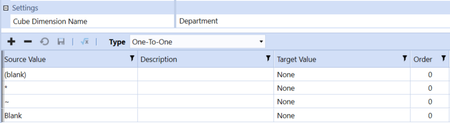
Hi Team, My validation step failed because the source mapping is missing for blank records. I attempted to add a mapping with (blank) for the source value and None for the target value, but it didn’t work. How should blank source values be handled in the mapping? Can you please help me with this if anyone face similar issue ? Thank youSolvedKK201214 days agoNew Contributor III761Views0likes4CommentsXFJ - Excel Import Journal Template
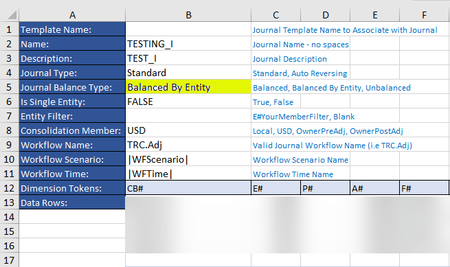
I uploaded the XFJ Excel template with the "Balanced by Entity" Journal Type. However, OneStream set back the Journal Type as "Balanced" instead of "Balanced by Entity after I imported the template . "Is "Balanced By Entity" not the correct selection? Thanks,Solvedtwn127 days agoNew Contributor II3.4KViews0likes5Comments
Import XML to create objects
Hi All, I have a process that exports a dashboard and all of its components to XML. It then reads through the XML and creates new objects. The process works when I import the XML by hand. I was wondering if there is a way to have the code: 1) delete objects if they exist 2) import the XML to create the new objects. Thank you, ScottSolvedssmith-nova1 month agoContributor2.5KViews0likes9CommentsReset Scenario Error: Error processing data. The item was not found. Entity, Parent, -1.
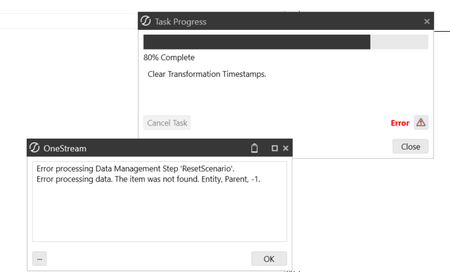
Hi, I have encountered an error when running reset scenario that says "Error processing data. The item was not found. Entity, Parent, -1." I understand that the possible cause of this issue is that there might be orphaned entity members. However, in the application I am working on there are no orphaned members. Could there be any other possible cause that I could look into? There is not much detail in the logs that I can find. Any suggestion/recommendation is appreciated :) Thanks!krstnmvo1 month agoNew Contributor61Views0likes1Comment
Best Practice for Managing Outdated Members in Transformation Rules?
We have recently received feedback from several entities regarding outdated account members that still exist within our Transformation Rules. Before making any changes, I wanted to gather input on best practices for handling these scenarios. Specifically, I’m unsure whether it is appropriate to remove or delete these members, or if they should be retained and continue to be mapped for historical reporting purposes. If anyone has guidance or experience with managing outdated members in Transformation Rules, your insight would be greatly appreciated.ckrussel1 month agoNew Contributor84Views0likes3Comments
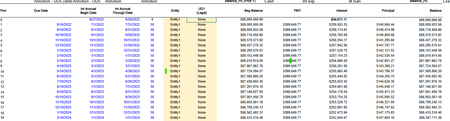
Annotation Matrix load
Hi, we would like to know if it is possible to load multiple columns of amounts and annotations as a matrix load ( we have 3 date columns and 3 columns for amounts and it would be an account matrix as each column would go to a different account). We are able to load a matrix load where one column is an annotation and there are multiple amount columns, but when there are multiple annotation and amount columns, we have not been successful. See screenshot. The date columns would be loaded as annotations, the Begbal, Pmt, Interest columns to amount. Each column would be going to a different account. Please advise, thank youClaudiaMeloni1 month agoNew Contributor75Views0likes2Comments