How to make coffee with OneStream?
Hi there! If you are reading this post it probably means that you are a coffee addict. Or a OneStream addict. Or both! Before starting the explanation on how to make coffee with OneStream, I would like to say I had the idea of making this while reading the OneStream Foundation Handbook – I recommend this book, it is fun to read and they are lots of good stuff in it! For example, page 21 where Greg Bankston (GregB) said “I have joked on numerous occasions that OneStream can probably even automate a customer’s coffee maker for them if they can find one that accepts the right commands. While it is indeed a joke, it is not too far from the truth either.” To make coffee with OneStream you will need to Buy a Philips hue system and connect your coffee machine to it. Connect the api of the Philips Hue to OS Create a powershell script Open some firewall ports Create a DM job that links the dashboard with the BR Create a BR that launches a script Create a dashboard – just because life is nicer with a dashboard! For the 2 first steps, after buying your Philips Hue System you should read this blog : https://developers.meethue.com/develop/get-started-2/#turning-a-light-on-and-off The idea here is to generate a remote username. Now you should test the api connection using a powershell script like the one below. When it is working then you should save this script on your OneStream server. You can notice that the power plug connected to the Philips Hue is seen as a light as it has only an On/Off state. # Hue Bridge $hueBridge = "http://192.168.109.10:80/api" # Username $username = '4HNMsqH9n5NwMH9n5NFVLY9n5NzZrml-45e' # Command to Turn on $apicontent= '{"on":true}' # Command to Turn off – activate it on another script # $apicontent= '{"on":false}' # Invoke commands Invoke-WebRequest -Method put -Uri "$($hueBridge)/$($username)/lights/21/state" -Body $apicontent As the script is sitting on your server, I would recommend that you run it with powershell directly on the server. It is a good way to test and check that all firewall ports are open. Once you have the powershell script running it should already turn on your coffee from the server. Do not forget to add the script to turn it off too. Now you need to go to your OneStream application to create a Extender business rules. It should call for the powershell script on your server. It will look like this : Namespace OneStream.BusinessRule.Extender.PlugOn Public Class MainClass Public Function Main(ByVal si As SessionInfo, ByVal globals As BRGlobals, ByVal api As Object, ByVal args As ExtenderArgs) As Object Try ' Process.Start("powershell", "-File C:\TurnOnHue") Shell("powershell -ExecutionPolicy Bypass ""C:\TurnOnPlug"" ") Return Nothing Catch ex As Exception Throw ErrorHandler.LogWrite(si, New XFException(si, ex)) End Try End Function End Class End Namespace Now you need to create a Data Management job that will kick your Extender BR. And last but not least you end up with your Dashboard!8.8KViews45likes11Comments
Unleashing the Power of OneStream Event Handlers: Enhancing User Experience and Efficiency
Unlocking the Potential of OneStream Event Handlers Hey there! Thanks for dropping by to read about OneStream Event Handlers. If you're looking to supercharge your application's capabilities, you've come to the right place. Let's dive into the world of Event Handlers and discover how they can take your OneStream experience to the next level.3.3KViews26likes0CommentsMap Component Tutorial
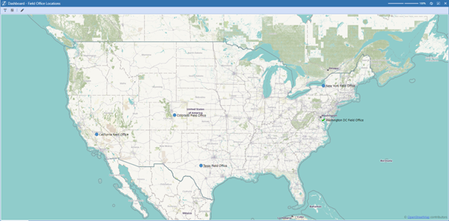
So you’ve bought the OneStream Advanced Reporting and Dashboards book - congratulations on being on your way to mastering these tools! The book is chocked full of examples and guidance on how to tailor your user experience, but here’s something extra – a tutorial on how to use Map Components in your application. We’ll walk through setting up a Dashboard with an interactive map to provide users with a visual display of locations, from collecting coordinates to displaying locations that are click-enabled to display relevant data.3.2KViews9likes3CommentsMenu Component in Practice
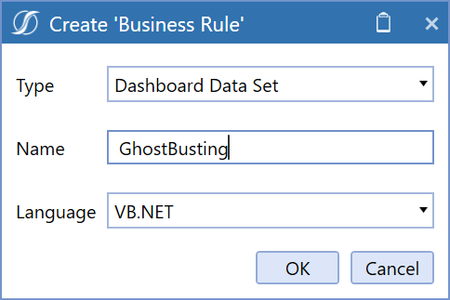
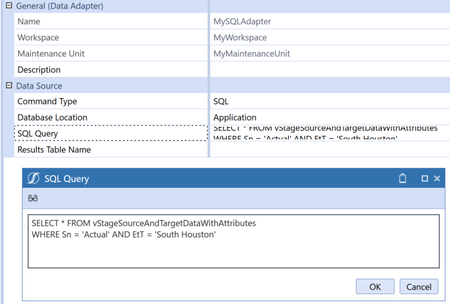
If you create the new Menu Component in your Maintenance Unit, you will quickly notice that it has very few properties. That's because its configuration will actually come from an attached Data Adapter, which must produce a set of tables containing all menu items and their configuration. The format of such tables has to be somewhat precise, matching what the component expects. For this reason, the best way to produce them (at least while you familiarize yourself with this mechanism) is to create a Dashboard DataSet using a couple of utility classes built for this specific task. The first thing we will do, in our rule, is to create an XFMenuItemCollection object. This represents our menu, which we will populate with items and eventually return (as a DataSet) at the end of the function. Public Function Main(ByVal si As SessionInfo, ByVal globals As BRGlobals, ByVal api As Object, ByVal args As DashboardDataSetArgs) As Object Try Select Case args.FunctionType Case Is = DashboardDataSetFunctionType.GetDataSet If args.DataSetName.XFEqualsIgnoreCase("MainMenu") Then ' create the menu object Dim menu As New XFMenuItemCollection() Menu items will be created by instantiating objects of type XFMenuItem. These objects will hold all the configuration properties for the item, including the font and colors that it will use. There are a few different constructors you can use, to specify all sorts of properties; the one used here is the shortest one! ' create top-level item ' XFMenuItem(string uniqueName, string headerText, string foreground, string background, bool isBold, bool isItalic, bool isEnabled, bool isSeparator, string parameterValue) Dim parentMenuItemOne As New XFMenuItem("1", "Parent", _ "White", "SlateGray", False, False, True, False, Nothing) ' create items for the second level Dim childMenuItemOne As New XFMenuItem("1.1", "Child 1", _ "Black", "White", True, True, True, False, Nothing) Dim childMenuItemTwo As New XFMenuItem("1.2", "Child 2", _ "Black", "White", True, True, True, False, Nothing) ' create item for the third level Dim grandChildMenuItemOne As New XFMenuItem("1.1.1", "Grandchild 1", _ "White", "SlateGray", True, True, True, False, Nothing) Most of the properties are self-explanatory, but you might wonder what "parameterValue" is. That's the value that will be pushed into the Bound Parameter specified on the actual component later on, so that Actions or other components can pick it up. We will come back to this later. Now we need to define the relationships between items. We do that by manipulating the .Children property of each parent item, which must be a list containing the children (duh!) items. ' create the hierarchy by adding children to direct parents as a List ' attach 1.1.1 as a child of 1.1 childMenuItemOne.Children = New List(Of XFMenuItem) From {grandChildMenuItemOne} ' attach 1.1 as a child of 1 parentMenuItemOne.Children = New List(Of XFMenuItem) From {childMenuItemOne} ' you can also manipulate the list once created. ' attach 1.2 as a child of 1 parentMenuItemOne.Children.Add(childMenuItemTwo) In a similar way, top-level items are added to the list contained in the .MenuItems property of our XFMenuItemCollection instance. ' add item 1 as a top-level members of the menu menu.MenuItems.Add(parentMenuItemOne) Before we return the resulting menu, if you are dealing with dynamically-generated structures with a lot of members, you might want to perform a safety check and purge extra members: While menu.IsAboveMaxMenuItemLimit(si) menu.MenuItems.RemoveAt(menu.MenuItems.Count - 1) End While Last, we use the .CreateDataSet method of our menu object to return the DataSet. ' generate the dataset and return it Return menu.CreateDataSet(si) Now that we have the rule, we can create a DataAdapter to execute it. Notice how, when testing it, it produces two tables: one with item properties, and one with their relationships. Now that we have an Adapter, we can create the Menu Component and attach the Adapter to it. You can then assign it to a Dashboard and preview it, after you save it. This is fun but a bit pointless! We want menus so that the user will actually choose something and we'll get the result of that choice. In order to do that, we need to specify the Bound Parameter. Whenever the user selects an item, the "parameterValue" associated with that item will be pushed into the specified Parameter; we can then reference that Parameter in an Action or extender rule, to trigger something like navigating to a website. Note that the Parameter doesn't need to exist! OneStream will just create one for you in the background. Then we place an Action on our Component, referring to the Parameter. The last step is to go back to our rule and specify a different parameterValue for "leaf" items, so that the Parameter will contain something. Dim childMenuItemTwo As New XFMenuItem("1.2", "Main Page", _ "Black", "White", True, True, True, False, "https://www.onestream.com") ' create item for the third level Dim grandChildMenuItemOne As New XFMenuItem("1.1.1", "OneCommunity", _ "White", "SlateGray", True, True, True, False, "https://community.onestreamsoftware.com") Et voilà! You can now execute the Dashboard and verify that it works!589Views8likes4Comments